
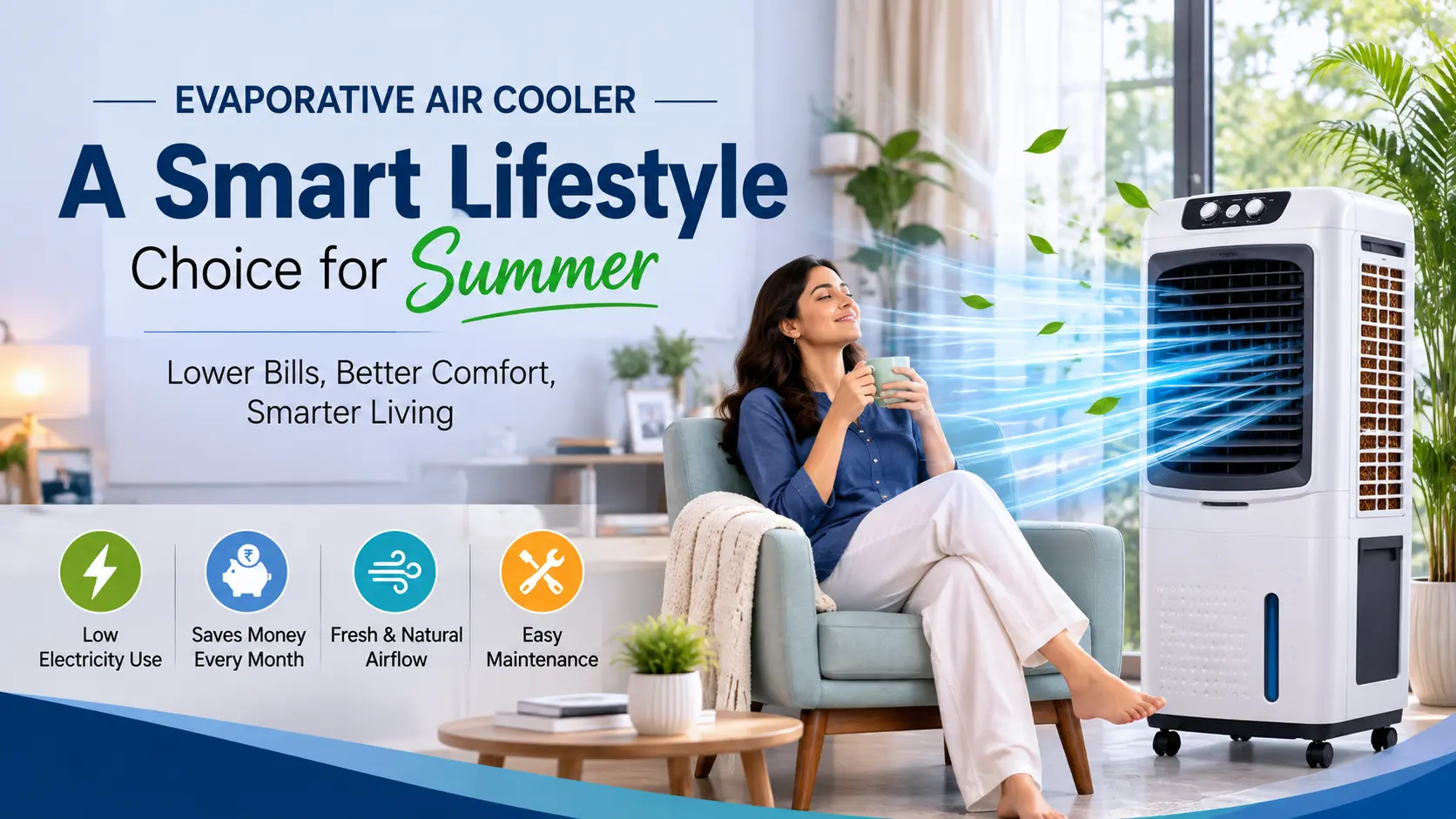
How an Evaporative Air Cooler Helped Me Build a Smarter Lifestyle
Every summer, I searched for a cooling solution that could keep me comfortable without making my electricity bill difficult to manage. If you’re comparing cooling options today, you probably have the same question I had: can I stay cool while spending less? That question led me to explore evaporative air coolers instead of relying only on traditional air conditioners.
Before making any decision, I compared electricity consumption, maintenance requirements, and long-term ownership costs. I discovered that most residential evaporative air coolers typically consume between 75 and 700 watts, while many room air conditioners operate between 900 and 2,000 watts, depending on their capacity and efficiency. That difference encouraged me to learn how cooling technology affects both monthly expenses and everyday comfort.
As I continued my research, I realized that a smart lifestyle isn’t about buying the most expensive appliance. It’s about choosing products that balance comfort, energy efficiency, sustainability, and long-term value. In this guide, I’ll combine my experience with practical facts, real comparisons, and buying insights to help you decide whether an evaporative air cooler is the right choice for your home and lifestyle.
What Does a Smart Lifestyle Mean to Me?
When I first thought about living a smarter lifestyle, I assumed it meant buying expensive smart devices. After researching and changing my daily habits, I realized it was more about making practical decisions that improve comfort while reducing unnecessary expenses.
A report by the International Energy Agency shows that buildings account for nearly 30% of global final energy consumption. That statistic made me realize every energy-saving decision at home can contribute to lower utility bills and more responsible energy use.
Today, I don’t judge a product only by its price. I compare electricity consumption, maintenance costs, expected lifespan, and everyday performance. That simple approach has helped me make better purchasing decisions and avoid unnecessary long-term expenses.
Why I Started Looking Beyond Traditional Air Conditioning
My biggest concern wasn’t the purchase price of an air conditioner. It was the monthly electricity bill that kept increasing during summer, especially when the system operated for several hours every day.
While comparing cooling technologies, I found that many residential evaporative air coolers typically consume 75–700 watts, whereas many room air conditioners operate between 900–2,000 watts, depending on capacity and operating conditions. That difference immediately caught my attention.
I also learned that evaporative coolers work differently. Instead of using compressors and refrigerants, they cool air through natural water evaporation. That simple process reduces energy consumption and can provide effective cooling in hot, dry climates with proper ventilation.
My First Experience Using an Evaporative Air Cooler
Before using an evaporative air cooler, I expected it to perform exactly like an air conditioner. After learning how evaporative cooling works, I adjusted my expectations and focused on comfort, airflow, and everyday operating costs instead.
The first improvement I noticed was the continuous flow of fresh outdoor air. Unlike many closed-room cooling systems, the cooler constantly introduced fresh air, making the room feel less stuffy when windows remained partially open.
After several weeks of regular use, I realized the biggest advantage wasn’t achieving extremely low temperatures. Instead, it was maintaining comfortable airflow while using less electricity, making it a practical choice for my daily routine in suitable weather conditions.
How an Evaporative Air Cooler Made My Lifestyle Smarter
One of the first changes I noticed was lower energy consumption during summer. Since evaporative coolers mainly operate with a fan and water pump, they generally require much less electricity than compressor-based cooling systems.
Maintenance also became easier than I expected. Cleaning the cooling pads, checking the water level, and removing dust every few weeks helped maintain performance without requiring expensive servicing or specialized technical knowledge.
Looking beyond monthly expenses, I found the total ownership cost equally important. Lower electricity use, simpler maintenance, and fewer mechanical components made evaporative cooling a practical long-term investment for my home and daily lifestyle.
What I Learned Before Buying One
The most important lesson I learned was that climate matters more than marketing. Evaporative coolers deliver their best performance in hot, dry regions where lower humidity allows water to evaporate efficiently and naturally cool incoming air.
I also discovered that choosing the correct cooler size is essential. Manufacturers usually recommend selecting airflow capacity based on room size, measured in cubic feet per minute (CFM), to achieve consistent cooling performance.
Finally, I realized that buying the cheapest model isn’t always the smartest decision. Better-quality cooling pads, durable construction, reliable motors, and higher energy efficiency often provide better long-term value than lower-priced alternatives.
Situations Where an Evaporative Air Cooler Works Best
When I researched different cooling solutions, I realized that an evaporative air cooler isn’t designed for every environment. Its performance depends mainly on climate, ventilation, and choosing the correct cooling capacity for the available space.
Homes & Living Rooms
I found that evaporative air coolers work well in living rooms, bedrooms, and family spaces with good airflow. Opening a window slightly allows warm indoor air to escape while fresh cooled air continuously circulates throughout the room.
Home Offices
While working from home, I wanted a comfortable workspace without running an air conditioner all day. Since many residential evaporative coolers consume between 75 and 700 watts, they can help reduce electricity usage during long working hours.
Small Businesses & Retail Stores
I noticed that many retail stores, cafés, and small businesses choose evaporative cooling because operating costs matter throughout the day. Lower electricity consumption helps business owners manage monthly expenses while maintaining customer comfort in suitable climates.
Warehouses & Industrial Facilities
Large industrial buildings generate significant heat from equipment, lighting, and daily operations. High-capacity evaporative cooling systems can move thousands of cubic feet of air per minute, making them practical for warehouses, factories, and production facilities with adequate ventilation.
Outdoor & Semi-Open Spaces
I also discovered that evaporative coolers perform effectively in patios, workshops, garages, restaurant terraces, and event spaces. Unlike refrigerated air conditioning, these environments benefit from continuous fresh airflow where enclosed cooling isn’t practical.
When I Wouldn’t Recommend an Evaporative Air Cooler
One lesson I learned quickly is that every cooling system has limitations. Understanding where an evaporative cooler performs poorly is just as important as knowing where it performs well.
High-Humidity Regions
Evaporative cooling depends on water evaporation. When outdoor humidity remains consistently high, evaporation slows down, reducing the cooler’s ability to lower air temperature effectively compared with dry climate conditions.
Completely Sealed Rooms
I wouldn’t recommend using an evaporative cooler inside a tightly sealed room. Fresh air needs a path to enter while warm air exits, making proper ventilation essential for consistent cooling performance.
Places That Need Very Low Temperatures
If your goal is maintaining temperatures similar to refrigerated air conditioning, an evaporative cooler may not meet your expectations. It focuses on improving comfort through natural cooling rather than producing very cold indoor temperatures.
Areas With Poor Water Quality
I also learned that hard water can reduce cooling pad efficiency over time because mineral deposits gradually build up inside the system. Regular cleaning and proper maintenance help extend equipment life and maintain cooling performance.
Smart Tips That Improved My Cooling Experience
After using an evaporative air cooler regularly, I discovered that a few simple habits made a noticeable difference in cooling efficiency, operating costs, and long-term performance.
Keep a Window Slightly Open
Instead of closing every window, I leave one slightly open while the cooler operates. This allows warm indoor air to escape and supports continuous circulation of fresh cooled air throughout the space.
Clean the Cooling Pads Regularly
Dust and mineral deposits gradually reduce cooling efficiency. I inspect and clean the cooling pads every few weeks during heavy summer use to maintain consistent airflow and reliable cooling performance.
Use Clean Water
Using clean water helps reduce mineral buildup inside the pump and cooling pads. Better water quality can improve system efficiency while reducing maintenance requirements throughout the cooling season.
Position the Cooler Correctly
I noticed better performance when the cooler drew fresh outdoor air instead of recirculating indoor air. Proper placement near an open window or doorway significantly improves airflow and cooling effectiveness.
Perform Seasonal Maintenance
Before each summer season, I inspect the fan, water pump, water lines, and cooling pads. Spending a little time on preventive maintenance helps avoid unexpected breakdowns and keeps the cooler operating efficiently.
Is an Evaporative Air Cooler Worth It?
After comparing purchase price, electricity consumption, maintenance requirements, and daily comfort, I realized that value isn’t determined by one feature alone. The best cooling solution depends on where and how it will be used.
If I lived in a hot, dry climate and wanted lower electricity costs, I would confidently consider an evaporative air cooler. Its combination of energy efficiency, fresh airflow, and simple maintenance makes it a practical everyday choice.
However, I also understand that it isn’t the perfect solution for every situation. Evaluating your local climate, room size, ventilation, and cooling expectations before purchasing will help you make a smarter and more informed investment.