What Is The Minimum Payment On Credit Card
The minimum payment on credit card bills may look small, but it can cost you a lot over time. Many people pay only the lowest amount due because it feels easier on the wallet. But that choice can lead to extra interest and longer debt.
In this guide, you’ll learn what a credit card minimum payment really means, how banks calculate it, and what happens if you keep paying only the minimum amount. We’ll also cover simple ways to pay your balance faster and avoid extra charges.
By the end, you’ll understand how to use your card wisely and avoid getting stuck in a debt trap. I’ll also make sure all primary and secondary keywords are covered naturally across the full article.
What Is The Minimum Payment On A Credit Card?
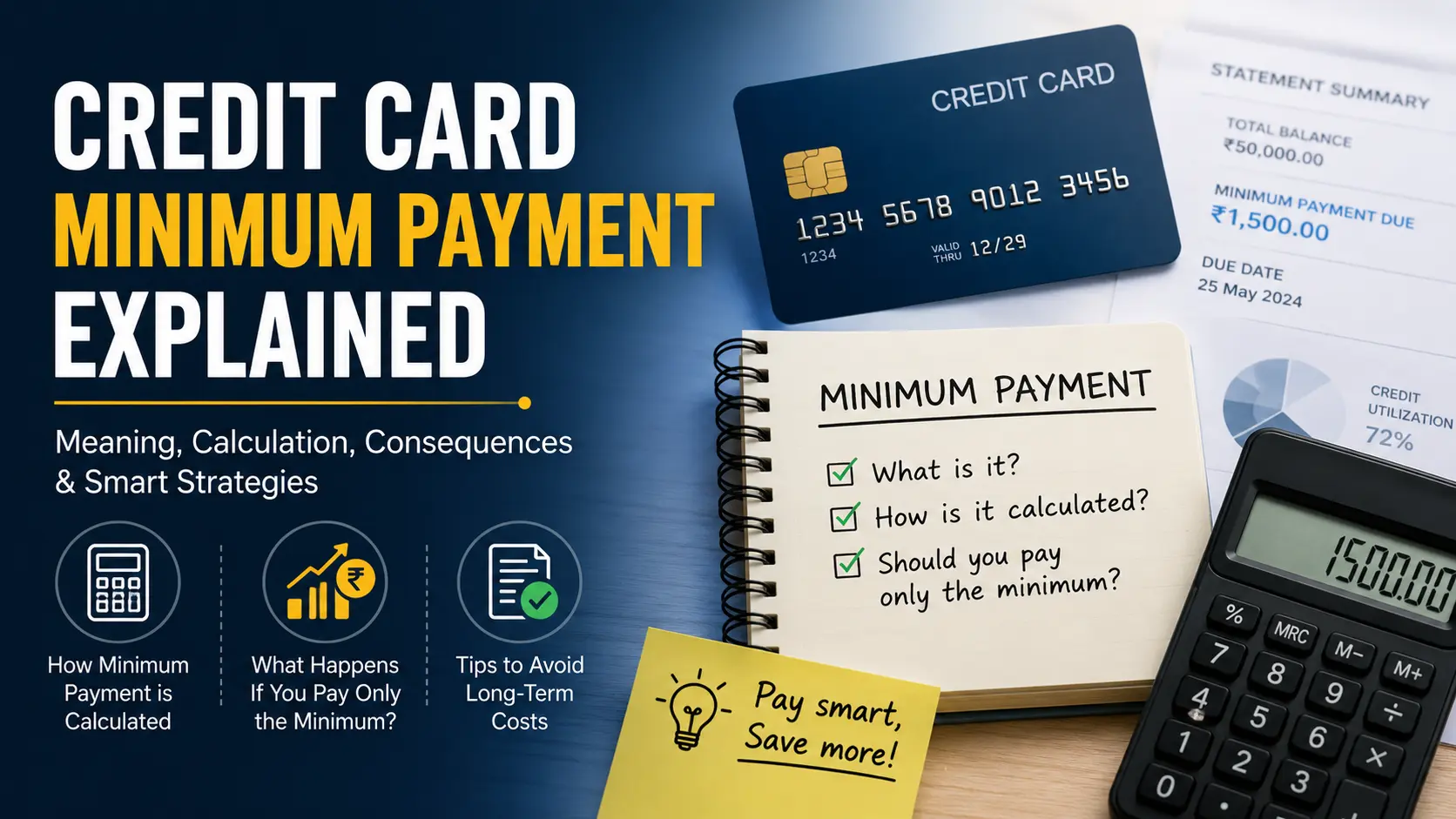
The minimum payment on credit card bills is the smallest amount you must pay by the due date to keep your account active. Banks do not ask you to pay the full bill every month, but they do require this minimum amount.
In simple words, the minimum credit card payment is the least payment needed to avoid missing your bill completely. It is usually a small part of your total balance. Most banks calculate it as a percentage of the outstanding amount plus fees, taxes, or EMI dues if any.
For example, if your total bill is ₹20,000 and the bank asks for 5% as the minimum due, you may only need to pay ₹1,000 for that month. But the remaining amount still stays on your card and starts collecting interest.
Many people think paying the minimum is enough to avoid problems. It does keep the account in good standing for now, but interest keeps growing in the background. That is why understanding this small number matters a lot.
Also read – Can I Get a Credit Card Without a Salary?
How Issuers Calculate The Minimum Payment
Many people wonder how minimum payment is calculated on a credit card bill. The method is usually simple, but it can change from one bank to another.
Most banks use a minimum payment percentage between 2% and 5% of the total outstanding balance. Some issuers also add GST, EMI amounts, over-limit charges, or late fees to the final minimum due.
A common formula looks like this:
Minimum Payment = Percentage of outstanding balance + fees + taxes + EMI dues
Here’s a small example:
Suppose your total balance is ₹8,000 and the bank uses a 5% minimum payment percentage.
5% of ₹8,000 = ₹400
If there are no other charges, your minimum payment becomes ₹400.
Now let’s take a bigger balance.
Suppose your card balance is ₹75,000. Your bank asks for 3% as the minimum due. You also have a ₹500 late charge.
3% of ₹75,000 = ₹2,250
₹2,250 + ₹500 = ₹2,750 minimum payment
Even though ₹2,750 may look manageable, the remaining balance still earns interest every month. That’s where many card users get caught between a rock and a hard place.
Some banks also set a fixed floor amount. For example, if your calculated minimum is only ₹150, the bank may still ask for at least ₹200.
You can usually find the exact formula on your monthly statement or in the card terms shared by your issuer.
Also read – How Much Salary Required For a Credit Card?
Minimum Payment Vs Statement Balance Vs Past Due
These three terms often confuse card users, but they are very different.
The minimum due vs statement balance difference is simple. The minimum payment is the smallest amount you must pay to avoid penalties. The statement balance is the full amount you spent during the billing cycle. Paying the full statement balance clears your bill completely.
“Past due” means you missed the due date. If you do not pay even the minimum payment on time, the unpaid amount becomes past due and may trigger extra charges.
So, think of it like this. Minimum payment keeps your account active. A statement balance clears your debt. Past due means you have delayed payment and may face penalties.
Understanding this helps you avoid confusion and manage your card better.
What Happens If You Pay Only The Minimum?
Many people ask what happens if you only pay minimum on their credit card. It may look safe at first, but it can create long-term problems.
When you pay only the credit card minimum payment, the remaining balance does not go away. It carries forward to the next month. On this leftover amount, the bank charges credit card interest on minimum payment balance, often at a high rate like 30%–40% yearly.
This means your debt grows slowly but steadily. Even small purchases can take years to clear if you only pay the minimum payment on credit card bills.
For example, imagine a ₹50,000 balance with 36% annual interest and a 3% minimum payment. You pay ₹1,500 in the first month. But most of it goes to interest, not principal. At this pace, it can take around 7–8 years to fully close the debt, and you may end up paying more than ₹80,000 in total.
This is the biggest minimum payment consequences issue. Your debt becomes long-lasting and expensive.
Your credit score may not drop immediately if you pay on time, but high usage keeps your credit utilization ratio high. That can affect future loan approvals.
Missing even the minimum due date is worse. It can lead to late fees and damage your credit history quickly. That’s why staying on top of payments is important, even if you cannot clear the full bill.
Paying only the minimum keeps you afloat, but it does not help you move forward financially.
Also read – Can I Get a Credit Card with 650 CIBIL Score?
Strategies To Avoid Long-Term Cost
If you want to reduce stress and pay less interest, you need simple habits. These steps can help you pay off credit card faster and avoid long debt cycles.
First, always try to pay more than the minimum credit card payment. Even a small extra amount helps reduce interest.
Second, clear high-interest cards first. This saves money over time.
Third, set auto-pay for full statement balance when possible. This avoids missed payments and late fees.
Fourth, use reminders before due dates. Missing payments increases cost quickly.
Fifth, avoid using the card for new spending while you have old dues. This keeps your balance from growing.
Sixth, track your spending weekly. It helps you stay in control and avoid surprises.
Seventh, if possible, split big payments into two parts in a month. This reduces interest load slightly.
These simple habits make a big difference. Over time, they help you become debt-free faster and reduce pressure from credit card bills.
When Paying Only The Minimum Might Make Sense
Paying only the minimum payment on credit card bills is not ideal, but there are a few situations where it can help in the short term.
If you are facing a temporary cash shortage, paying the credit card minimum payment keeps your account active and avoids penalties. It helps you stay in good standing until your income improves.
It can also make sense during emergencies, like medical bills or urgent travel, when you need to protect your cash flow for more important needs.
Another case is when you are waiting for a salary or payment delay. In such situations, paying at least the minimum due prevents late charges.
Still, this should only be a short-term choice. You should move back to full payments as soon as possible. Otherwise, interest builds up and increases your total cost over time.
Fees, Penalties, and Creditor Actions
If you miss the minimum due date, banks charge a late fee and a minimum payment penalty. This fee can vary based on your card type and outstanding balance.
When you do not pay even the credit card minimum payment, interest keeps adding to the full unpaid amount. This makes your total bill grow faster each month.
Banks may also increase your interest rate if you miss payments often. This makes future borrowing more expensive.
If payments are missed for a long time, your account may be marked as overdue. This can hurt your credit score and reduce the chances of getting loans or new cards.
In serious cases, the bank may restrict your card or send your account to recovery teams.
Paying at least the minimum payment on credit card bills helps you avoid most of these issues. But clearing more than the minimum is always better for long-term control.
Conclusion
The minimum payment on a credit card may look small, but it can keep you in debt for years if you rely on it too much. Always try to pay more than the credit card minimum payment whenever possible.
Understanding how minimum payments are calculated helps you avoid surprises and control your spending better. It also reduces credit card interest on minimum payment balances over time.
Small extra payments today can save you a lot tomorrow. The goal is simple: stay out of long debt cycles and build healthy money habits.